


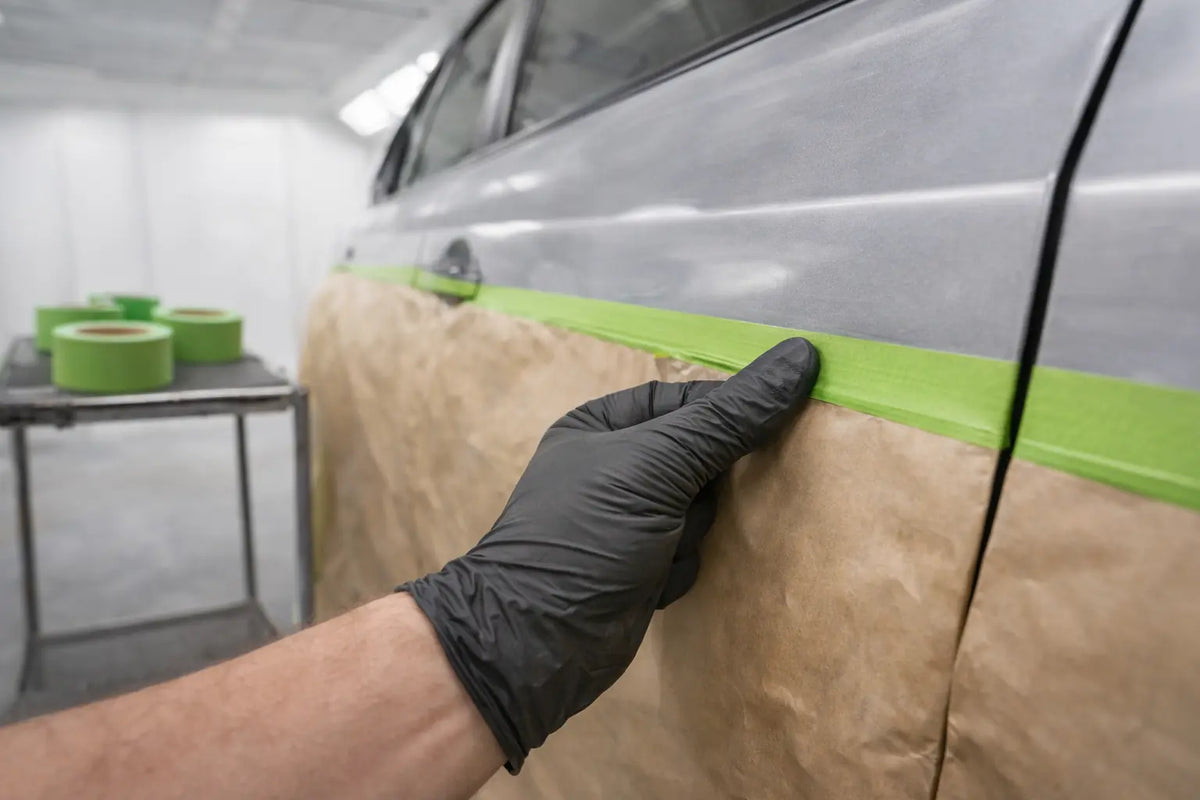
Masking is one of those tasks that doesn't get the respect it deserves — until it fails. A clean mask means crisp lines, no bleed-through, and no rework. A sloppy mask means paint edges you can feel with your fingertip, overspray on trim you already detailed, and time spent fixing problems that shouldn't exist.
Here are five masking mistakes that cost shops real money, and how to avoid them.
Mistake #1: Using the Wrong Tape for the Job
Not all masking tape is the same. That roll of generic beige tape from the hardware store is not the same product as 3M 233+ Green Performance Masking Tape. Professional automotive masking tape is engineered for specific temperature ranges, adhesion levels, and clean removal characteristics.
3M 233+ is the standard for most paint booth work — it handles bake cycles up to 250°F, removes cleanly for up to 30 days, and resists paint bleed along its edge. For fine lines on two-tone work, stripes, or custom graphics, switch to 3M 218 Fine Line tape. Its thinner backing conforms tightly to contours and produces a visibly sharper edge than standard masking tape.
For high-temperature applications like jamb work where you're baking primer and paint in separate cycles, step up to 3M 401+ or a dedicated high-temp tape rated for 300°F+. Standard tapes at high temperatures leave adhesive residue that becomes a paint adhesion problem on the next coat.
Mistake #2: Not Sealing Tape Edges
Laying tape down isn't enough — you need to seal the edge. Paint bleed happens when the edge of the tape lifts even slightly, allowing atomized paint to creep underneath. This is the number-one cause of wavy, rough paint lines.
After applying tape along your mask edge, run your thumb or a plastic squeegee firmly along the entire length of the tape edge closest to the paint area. Press hard. You're bonding the tape adhesive to the surface so there's no gap for paint to wick under. On textured surfaces or over existing orange peel, this step is critical — the tape needs to conform to every peak and valley.
For tape-to-tape seams (where two pieces of masking paper meet), overlap the tape by at least 1/2 inch and seal both edges. A gap between sheets of masking paper is an overspray disaster waiting to happen.
Mistake #3: Ignoring Temperature and Timing
Masking tape adhesion changes with temperature. Apply tape in a cold shop (below 60°F) and the adhesive doesn't bond well — it lifts during the spray cycle. Apply tape to a panel that's hot from sitting in the sun or a recent bake cycle, and the adhesive over-bonds, making clean removal difficult or impossible.
Best practice: mask vehicles at room temperature (65–80°F) and allow the tape to set for at least 10–15 minutes before spraying. If you're masking in a cold shop, warm the panel and the tape to at least 65°F before application. Keep a heat gun on low setting handy for stubborn areas.
Timing matters on the removal side too. Pull tape while the clear coat is still warm and in the flow stage — not fully cured and not cold. Removing tape from fully cured clear creates a hard, sharp edge that requires wet sanding to feather. Removing too early, while the paint is still wet, risks pulling the finish. The sweet spot is when the clear has tacked up but is still slightly pliable — usually 10–20 minutes after the final coat, depending on the product and booth temperature.
Mistake #4: Masking Over Contaminants
Tape doesn't stick to dirty surfaces. If you're masking over wax residue, silicone from detailing products, or even finger oils, the tape edge won't seal properly. You'll get paint bleed in random spots that look like the tape just decided not to work.
Before masking, wipe every surface the tape will touch with a quality wax and grease remover. Let it flash off completely before applying tape. This includes trim pieces, glass edges, rubber seals — everything. It takes two extra minutes and prevents problems you'd spend thirty minutes fixing.
Also, never reuse masking tape or masking paper. Used tape has reduced adhesion and may have paint buildup that creates an uneven mask edge. Fresh materials every time — the cost of a roll of tape is nothing compared to the cost of a repaint.
Mistake #5: Poor Paper Technique and Coverage Gaps
Masking paper isn't just about covering what you don't want painted. It's about controlling overspray, managing airflow around the vehicle, and creating clean boundaries. Common paper mistakes include:
- Using too-narrow paper: 12-inch paper on a hood edge leaves the rest of the hood exposed to overspray mist. Use 18-inch or 24-inch paper for large panels, or combine with a masking machine for full coverage.
- Leaving gaps at the bottom: Overspray settles downward. If your paper stops 6 inches above the floor, everything below it gets dusted. Extend paper to the ground or use a wheel masker to cover rocker panels and wheel wells.
- Not back-masking: When spraying a panel edge (like a fender edge at the door gap), fold a small piece of tape over the edge to prevent paint from wrapping around to the back side. This keeps jamb edges clean without needing to unmask and remask for jamb work.
- Paper shifting mid-job: Secure paper with multiple tape points, not just the top edge. A single piece of tape at the top lets the paper swing in booth airflow, exposing areas that should be covered.
Invest in a masking machine if your shop doesn't have one. A tabletop masking machine with 3M or Norton masking paper dispenses pre-taped paper that's faster to apply and more consistent than hand-taping sheets. The time savings pay for the machine within a few months.
Products Mentioned
- 3M 233+ Green Performance Masking Tape
- 3M 218 Fine Line Tape
- 3M 401+ High-Temperature Masking Tape
- Masking Paper and Film
Shop our complete selection of masking tapes, paper, and supplies at RDI.
Back to Pro Tips


